What Are Fibroids
Uterine fibroids are common (20–40% of women) benign tumours of the uterus, made up of enlarged smooth muscle fibres and fibrous connective tissue, and they can be located in different parts of the uterus, such as inside it, on its outer surface, or on the cervix. They usually occur in women of reproductive age and may vary in size, shape, or location. A woman may have one fibroid or multiple fibroids, which may develop and grow either gradually or over a short period of time. Uterine fibroids are often an incidental finding on the transvaginal ultrasound performed as part of a check-up, and therefore can be challenging for both the patient and her doctor regarding monitoring and treatment. It is worth noting, however, that cancer is a rare complication of fibroids.
When Is a Uterine Fibroid Dangerous?
A fibroid is usually benign rather than malignant, but it can become dangerous if it is large and causes severe symptoms or complications. Examples of serious symptoms include excessive menstrual bleeding, anaemia, severe pain, dysfunction of organs compressed by the mass, and problems during pregnancy. In addition, if a fibroid grows rapidly or appears after menopause, there is a need for prompt evaluation, as this may indicate a rare form of cancer such as leiomyosarcoma.
Types/Kinds of Fibroids
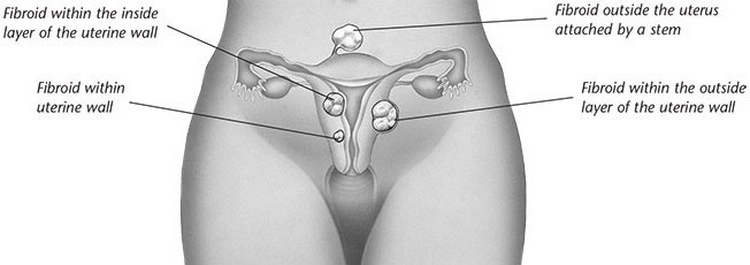
Fibroids are classified into three types, depending on their location in the uterus:
● intramural fibroids: This is the most common type. They develop within the muscular wall of the uterus and may cause intense contractions, pain, or increased menstrual bleeding, especially when they exceed 2–3 cm.
● subserosal fibroids:. These fibroids develop on the outer surface of the uterus and can reach a large size (5–6 cm or more). They often press on surrounding tissues, such as the bladder or bowel, causing difficulties with urination or bowel movements.
● submucosal fibroids: These develop inside the uterus and, due to their location, can cause pronounced symptoms such as heavy bleeding, even if they are small.
What Symptoms Do Fibroids Cause?
Uterine fibroids may be asymptomatic in many women. However, when a fibroid causes symptoms, these may include:
● menstrual abnormalities (heavier flow, painful periods, bleeding between periods)
● painful intercourse
● pelvic pain or pressure
● pressure on the bladder or bowel, with or without pain
● lower back pain
● frequent urination
● constipation
● subfertility/infertility, miscarriages, preterm birth
● pregnancy complications
● fatigue, dizziness, or palpitations due to anaemia caused by heavy bleeding.
The severity of symptoms depends on the size, number, and location of the fibroids.
What Causes Fibroids?
The causes of fibroids are not fully understood; however, there are several predisposing factors associated with their development, such as the following:
● heredity. Women with uterine fibroids in their family history are more likely to develop them.
● hormonal status. Early menarche increases the risk of developing fibroids, while later menarche appears to be protective. During pregnancy, when oestrogen levels increase, some women may notice an increase in fibroid size, especially in the first trimester. In contrast, after menopause, when oestrogen levels decrease, fibroids tend to shrink.
● ethnicity. Black women develop fibroids more frequently.
● age. Fibroids do not occur before puberty, but mainly after the age of 30.
● high body mass index.
● excessive consumption of red meat.
● polycystic ovary syndrome.
● diabetes.
What Treatment Is Recommended for Uterine Fibroids?
Dr D. Koleskas has extensive clinical experience in the various ways fibroids and their symptoms are managed.
Uterine fibroids rarely disappear completely with conservative/medical treatment, and if they continue to cause symptoms, surgical removal is the treatment of choice. Depending on the location of the fibroids, their symptoms, the woman’s age, and her preferences, removal is performed via laparoscopy, robot-assisted laparoscopy, or interventional hysteroscopy—procedures in which Dr D. Koleskas specialises and which he has performed as Director of the Gynaecology Department at the Royal Victoria Hospital, Newcastle, UK.
In some cases, imaging of the fibroids with MRI is recommended for better preparation and surgical safety. When fibroids are particularly large or other surgical problems coexist, a laparotomy (open surgery) is chosen. It is worth noting that the possibility of vaginal birth is not lost after fibroid removal; however, it depends on the extent of the surgery performed and the advice of the surgeon who carried out the procedure regarding future pregnancies.
Recovery
Recovery after surgical removal of fibroids depends on the type of procedure and the complexity of the case. For example, recovery after fibroid removal with laparoscopy or hysteroscopy is typically painless and much shorter compared to open surgery, as the hospital stay lasts 24–48 hours and a woman can return to normal activities within 1–2 weeks. In cases where the fibroid is removed via open surgery, recovery time may be longer, reaching up to one month. Follow-up by the doctor is necessary for potential side effects, complications, or recurrence of fibroids.
Obstetrician and surgeon gynaecologist M.R.C.O.G., C.C.T. D. Koleskas is available to answer questions about what uterine fibroids are, how they develop, when they are dangerous, and what the cost of treatment is. In 2009 he specialised in advanced laparoscopy at the hospital Royal Victoria Infirmary, Newcastle, where he performed a large number of laparoscopic and hysteroscopic procedures for the treatment of fibroids (myomectomies). Certification from the Royal College of Obstetricians and Gynaecologists of the UK: Benign Gynaecological Surgery: Laparoscopy, R.C.O.G. For more information, please contact the doctor and schedule your appointment.